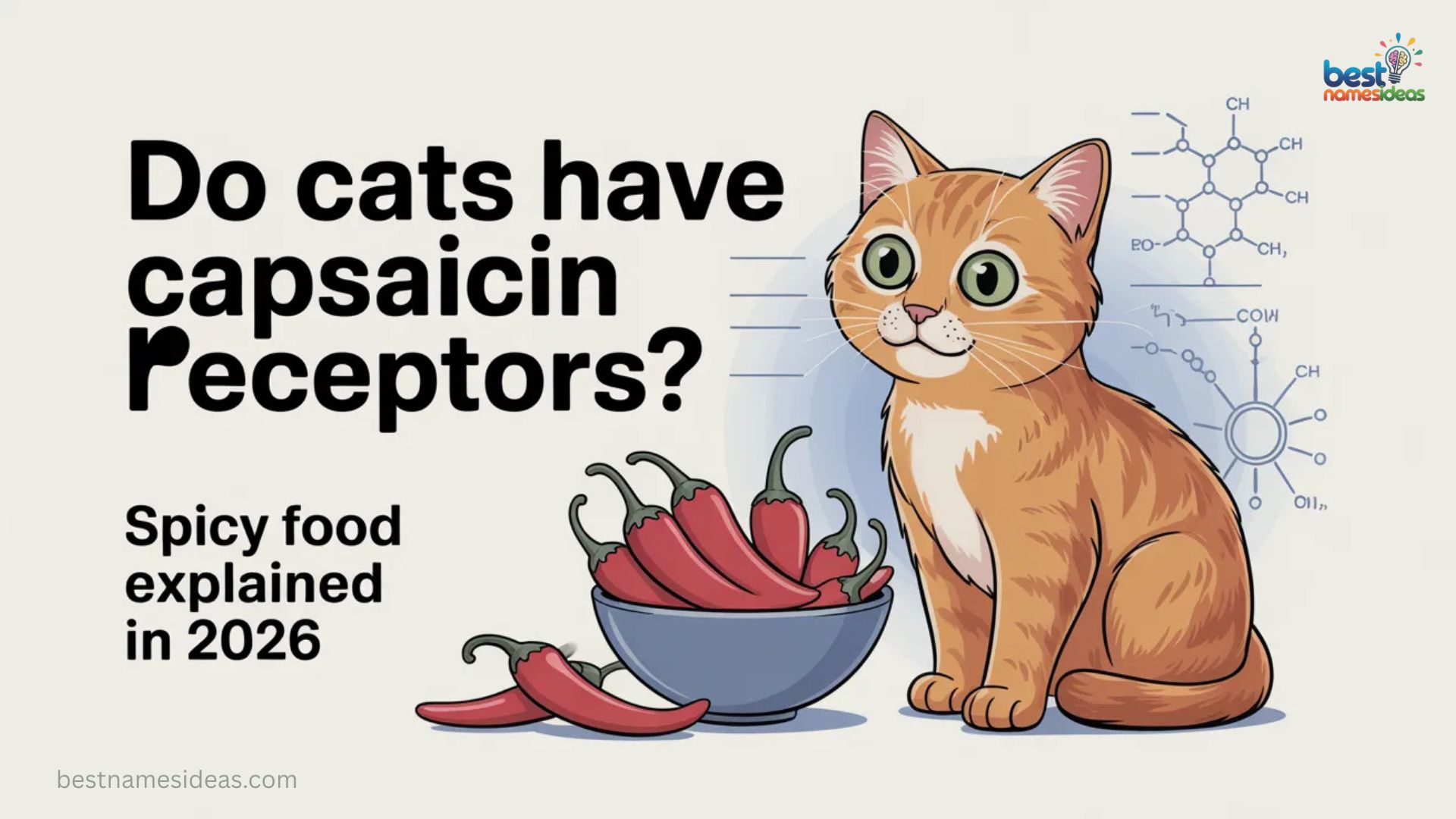
Imagine this: You’re cooking a spicy curry in your kitchen, the rich aroma of chilli oil and cayenne filling the room. Your cat wanders in, drawn by the smell, and boldly sniffs — or even licks — the edge of your spice-dusted chopping board. You wince in anticipation. But your cat barely reacts. Why?
The answer lies deep within the biology of your feline friend, specifically in the world of cats capsaicin receptors. It is a story of evolutionary biology, sensory neuroscience, and the curious ways in which different species experience the very same world so differently.
This article takes you on a comprehensive journey through the science of capsaicin, the receptor that detects it, and exactly why your cat’s response to spicy food is not quite what you might expect. By the end, you will have a new level of appreciation for just how extraordinary — and different — your cat’s sensory world truly is.
What Is Capsaicin and Why It Burns
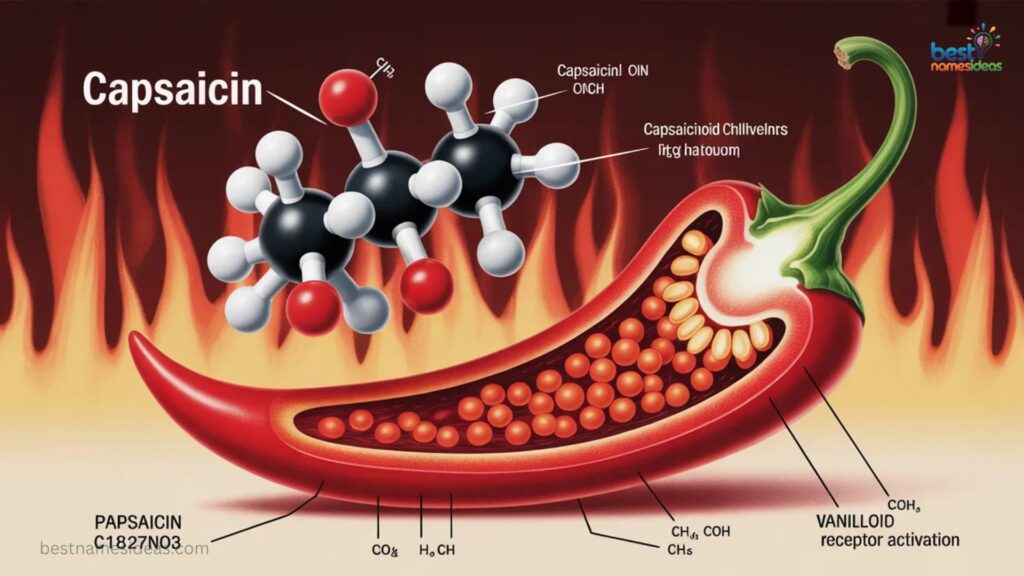
Capsaicin is the active chemical compound found in chilli peppers that produces the sensation of heat and burning. It belongs to a class of molecules called vanilloids, and it is what makes a jalapeño sting, a ghost pepper scorch, and a mild bell pepper feel completely neutral by comparison.
When capsaicin comes into contact with mucous membranes — in the mouth, throat, eyes, or skin — it binds to a specific protein receptor and triggers a pain and heat response. Interestingly, capsaicin does not actually raise tissue temperature. It only convinces the nervous system that a burning event is occurring. This is a case of neurological deception at the molecular level.
Evolutionarily, this chemical was developed by pepper plants as a defence mechanism against mammals that might eat and destroy their seeds. Birds, however, are entirely immune to capsaicin’s effects — and this is no accident, as birds serve as ideal seed dispersers for chilli plants, passing seeds intact through their digestive systems.
“Capsaicin is one of nature’s most elegant evolutionary tools. It selectively targets mammals while leaving birds unaffected, allowing the plant to choose its own dispersal agents.” — Dr. Joshua Tewksbury, Evolutionary Ecologist
What Are Capsaicin Receptors (TRPV1)?
The receptor responsible for detecting capsaicin is called TRPV1, which stands for Transient Receptor Potential Vanilloid 1. It is a protein ion channel found on the surface of sensory neurons, and it plays a critical role in detecting heat, acidity, and certain chemical irritants — including capsaicin.
When capsaicin binds to TRPV1, the channel opens and allows calcium and sodium ions to flood into the cell. This triggers an action potential — a nerve signal — that the brain interprets as burning pain or intense heat. It is the same receptor activated when you accidentally touch something dangerously hot.
TRPV1 is found in humans and many other mammals, and it is considered a thermosensor — a molecular thermometer of sorts. Researchers studying this receptor have made enormous strides in pain management, since TRPV1 inhibitors hold promise as powerful new analgesics.
The discovery of TRPV1 was so significant that scientists David Julius and Ardem Patapoutian were awarded the 2021 Nobel Prize in Physiology or Medicine for their work on this receptor. The Nobel Committee described their discovery as unlocking one of the key mysteries of how living beings sense heat and pain.
Learn more 250+ Animals That Start With X: Xtra Cute, Xtra Wild In 2026
Do Cats Have the TRPV1 Receptor?
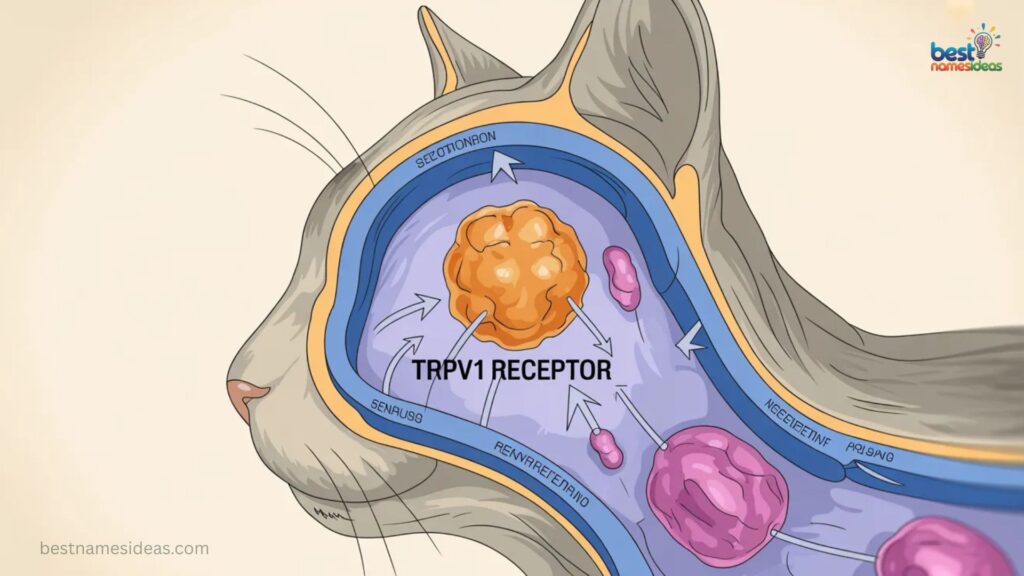
Here is where the science becomes truly fascinating. Cats do possess the TRPV1 receptor — but it functions quite differently from the human version. Research into feline neurophysiology has revealed that cats have a variant of TRPV1 that is significantly less sensitive to capsaicin than the receptor found in humans or most other mammals.
A key study published in Molecular Pain identified specific structural differences in the feline TRPV1 protein. These differences, particularly in the capsaicin-binding domain of the receptor, mean that it takes a far higher concentration of capsaicin to activate the feline TRPV1 compared to the human version.
In practical terms, this means that a quantity of capsaicin that would have a human desperately reaching for a glass of milk may produce only a mild or even imperceptible reaction in a cat. This is not because cats are braver or more stoic — it is because their molecular wiring is genuinely different.
This reduced sensitivity is consistent with a broader pattern in feline sensory biology. Cats are obligate carnivores, and their taste and smell systems have evolved exclusively around the detection of meat, prey, and survival-relevant hazards — not plant-based chemical compounds like capsaicin, which would have little relevance to their natural diet.
What Happens When Cats Eat Spicy Food?
Even though cats have reduced sensitivity to capsaicin at the receptor level, this does not mean spicy food is without effect or risk. The story is more nuanced than a simple yes or no.
When a cat consumes a capsaicin-containing food, several things can happen. First, some degree of irritation may still occur in the mouth, throat, and digestive lining — because even if the TRPV1 receptor threshold is higher, it is not zero. Second, the high fat, salt, and spice content of many spicy human foods can upset a cat’s gastrointestinal system, leading to vomiting, diarrhoea, or abdominal discomfort.
Third, and perhaps most critically, many spicy dishes contain ingredients that are genuinely toxic to cats — such as onion, garlic, and certain preservatives. These ingredients, not necessarily the capsaicin itself, are often the primary dietary danger when a cat eats spicy food.
“Just because a cat does not visibly react to spice does not mean it is safe. The lack of an immediate aversive response can give owners a false sense of security about foods that may still cause digestive harm.” — Dr. Karen Becker, Integrative Veterinarian
Do Cats Feel Heat or Just Pain?
TRPV1 serves a dual purpose: it detects both noxious heat (temperatures above approximately 43 degrees Celsius) and chemical irritants such as capsaicin. In humans, both stimuli feel essentially the same — a burning, painful sensation. For cats, the receptor’s altered capsaicin sensitivity does not appear to affect its heat-detection function.
This means cats can still feel dangerously hot temperatures through their TRPV1 receptor and will recoil from extreme heat just as we do. The evolutionary modification seems specifically targeted at capsaicin sensitivity, not heat sensitivity in general — which makes perfect biological sense, since a carnivore has no need to avoid spicy plants, but every need to avoid scalding surfaces.
Scientists believe this selective desensitisation to capsaicin is the result of millions of years of dietary evolution. Cats diverged from omnivorous ancestors long ago, and their sensory systems have been refined to focus on threats and rewards relevant to a purely carnivorous lifestyle.
Can Cats Taste or Just React to Spicy Foods?
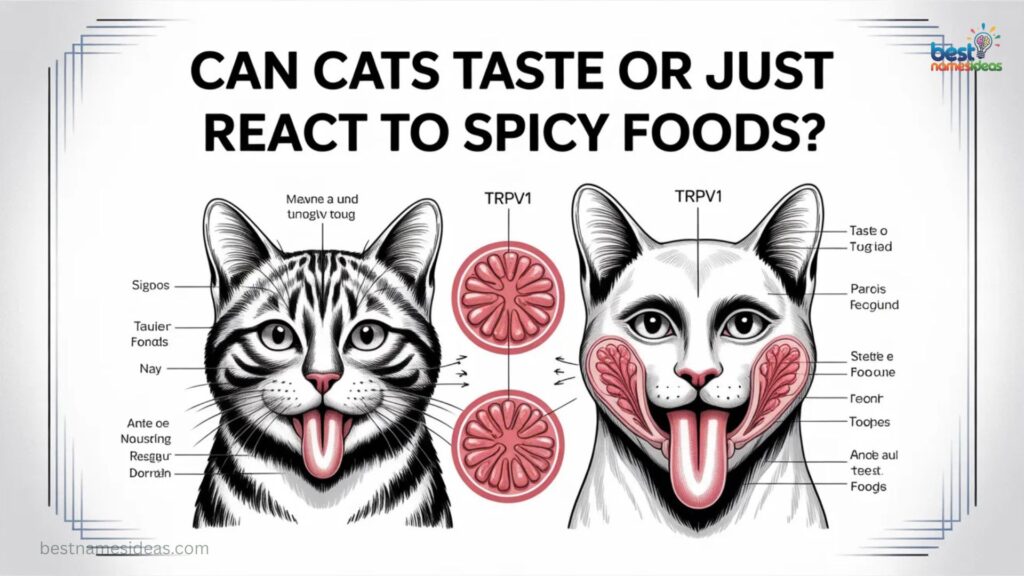
This brings us to another fascinating layer of feline sensory biology: taste. Cats are famously known as the only mammals that cannot taste sweetness. They carry a non-functional version of the gene encoding the sweet taste receptor (Tas1r2). As obligate carnivores, sweetness detection was simply never relevant to their survival, and the sense was lost over evolutionary time.
Don’t miss this Peacock Names: 420+ Unique, Funny, Cute & Creative Ideas for Your Bird In 2026
But what about spiciness? Interestingly, spiciness is not technically a taste at all — it is a pain and heat sensation mediated by the trigeminal nerve rather than the classical taste receptor cells of the tongue. The experience of spice in the mouth is closer to a tactile sensation than a flavour.
Given cats’ reduced TRPV1 sensitivity, they likely experience significantly less of the burning, stinging quality of spicy foods. They may detect the aroma intensely — cats have approximately 200 million odour receptors compared to the human average of 5 million — but the chemesthetic sting of capsaicin lands with far less punch in a feline than it does in us.
Myth Buster: Cat Hot Sauce
A popular internet myth suggests that sprinkling cayenne pepper or applying hot sauce around furniture or garden areas will deter cats from unwanted behaviours. The reasoning: capsaicin burns, so cats will learn to avoid treated areas.
This myth is problematic for several reasons. First, as established, cats have reduced TRPV1 sensitivity to capsaicin, meaning the deterrent effect is far weaker than assumed. Second, if a cat is exposed to significant amounts of capsaicin near the eyes or nose — where mucous membranes are more sensitive — it can cause genuine irritation and distress.
Third, accidental ingestion during grooming (cats lick themselves after contact with treated surfaces) can cause gastrointestinal upset. The American Society for the Prevention of Cruelty to Animals (ASPCA) advises against using capsaicin-based deterrents around cats, noting that risks outweigh the unreliable benefits.
Are Only Mammals Affected by Capsaicin?
As noted earlier, birds are uniquely insensitive to capsaicin. Research confirms that avian TRPV1 receptors have a structural variation that prevents capsaicin from binding effectively. This reflects the co-evolution of chilli plants and birds — the plant evolved a molecule that repels mammals (who crush seeds) while remaining palatable to birds (who disperse seeds intact).
Reptiles, fish, and amphibians also carry variants of the TRPV1 receptor, though their sensitivity profiles differ from mammals. The variation in TRPV1 sensitivity across the animal kingdom is a remarkable example of how the same molecular machinery can be tuned differently to reflect distinct ecological niches.
Among mammals, most species share a relatively high capsaicin sensitivity. Cats occupy an unusual middle position — more sensitive than birds, yet measurably less sensitive than humans and most other mammals.
Can Cats Taste Spicy Food?
To revisit this question with full nuance: cats cannot taste spicy food the way humans do. They lack the relevant taste receptors for sweetness and bitterness that often shape how humans experience flavour complexity, and their TRPV1 receptors are far less reactive to capsaicin. The olfactory experience of a spicy dish, however, may be intensely vivid for a cat.
This creates an interesting paradox: a cat may be drawn to a spicy dish by its powerful smell — especially if it contains meat — yet experience very little of the fiery chemical sensation that would discourage a human from eating too much. This is likely why some cats seem boldly unbothered, or even curious, around spicy food.
Why Are Certain Foods Spicy?
Beyond capsaicin, several other compounds produce spiciness or pungency through different mechanisms. Piperine in black pepper activates TRPV1 and related channels. Allicin in garlic and diallyl disulphide in onions create pungency via different chemical pathways. Gingerol in ginger activates TRPV1 at lower temperatures. Isothiocyanates in horseradish and mustard activate a separate receptor called TRPA1.
Each of these compounds may interact differently with feline receptors compared to human receptors. Garlic and onion in particular are not merely spicy for cats — they are actively toxic, capable of causing haemolytic anaemia by damaging red blood cells even in small amounts over time.
From a botanical perspective, plants produce these compounds as chemical defences against bacteria, fungi, insects, and herbivores. The evolutionary arms race between plants and the animals that consume them has produced an extraordinary library of bioactive molecules, each with its own receptor targets and species-specific effects.
Are Spicy Foods Bad for Your Cat?
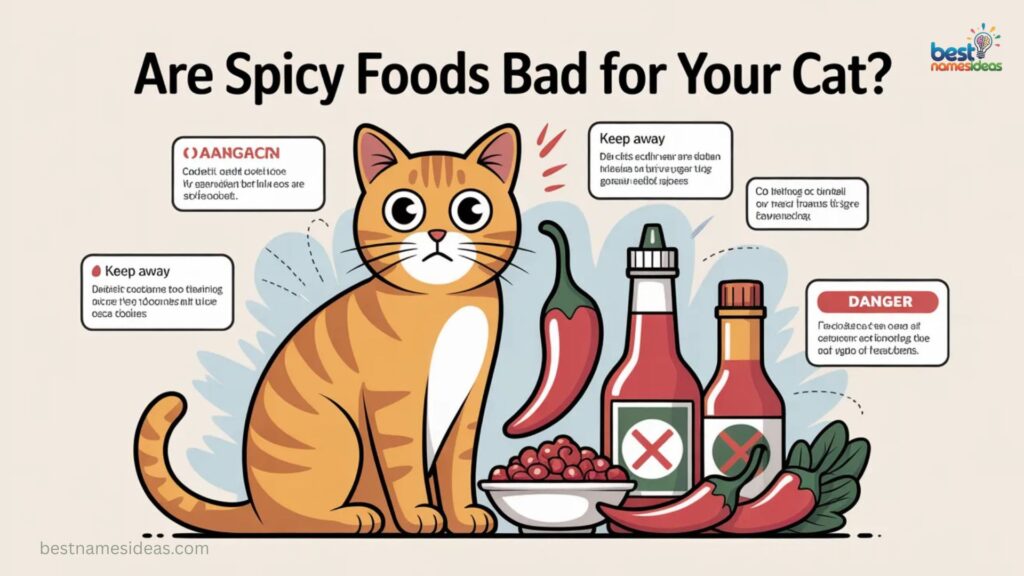
The short answer is yes — spicy foods are generally unsuitable for cats, even when your cat shows no obvious reaction. Here is why:
Gastrointestinal irritation: Even with reduced TRPV1 sensitivity, capsaicin and related compounds can still irritate the lining of the stomach and intestines at sufficient doses. Signs include vomiting, loose stools, and apparent abdominal discomfort.
Toxic ingredients: Most spicy dishes contain onion and garlic, both toxic to cats in any form — raw, cooked, or powdered. Even small amounts consumed regularly can accumulate and cause dangerous red blood cell damage.
Salt and fat overload: Spicy processed foods and sauces often contain excessive salt and saturated fat, neither appropriate for a cat’s nutritional needs. Both can stress the kidneys and cardiovascular system over time.
Nutritional displacement: A cat that regularly eats human food may eat less of its balanced cat food, creating deficiencies in protein, taurine, and essential fatty acids. Taurine deficiency in particular can lead to serious cardiac problems — dilated cardiomyopathy — in cats.
Veterinary nutritionists are united in their guidance: cats should eat a diet formulated for their specific biological needs, and human foods — especially spiced or seasoned ones — should be avoided as a matter of routine.
Why Does My Cat Seem to Love Spicy Food?
If you have ever noticed your cat gravitating toward your spicy leftovers, the explanation makes perfect sense once you understand feline sensory biology.
Cats are primarily attracted to meat. The protein and fat signatures of animal tissue are the core sensory targets for a cat’s smell and taste systems. When spicy dishes contain meat — chicken curry, beef chilli, spiced kebabs — your cat is responding to the meat, not the spice.
Additionally, many aromatic spices produce volatile organic compounds that are intensely interesting to a cat’s olfactory system, even if those compounds are not inherently rewarding. Curiosity is a powerful feline motivator, and a nose capable of detecting a mouse from across a room will certainly be drawn to the complex aromatic bouquet of a spiced curry.
Finally, warmth plays a role. Cats are notoriously drawn to warm surfaces and warm food. A freshly cooked spicy dish emits both heat and enticing aromas — a double sensory invitation for any curious cat in the vicinity.
“Cats are sensory opportunists. They investigate what smells interesting and what might contain protein. Spice is largely irrelevant to them — the meat underneath it is what matters.” — Dr. John Bradshaw, Anthrozoologist and Author of Cat Sense
Frequently Asked Questions
Q: Can capsaicin harm a cat even if it does not react strongly?
Yes. Even though cats have reduced TRPV1 sensitivity to capsaicin, consuming spicy foods can still cause gastrointestinal irritation, vomiting, and diarrhoea. The greater risk often comes from accompanying ingredients like garlic and onion, both of which are genuinely toxic to cats.
Q: Why do cats lack sweet taste receptors?
Cats lack a functional copy of the Tas1r2 gene, which encodes part of the sweet taste receptor. As obligate carnivores with no natural dietary requirement for carbohydrates or sugars, sweetness detection was biologically redundant and was lost over millions of years of evolution.
Q: Is it safe to use cayenne pepper to deter cats?
No, this is not recommended. The deterrent effect is unreliable due to cats’ reduced capsaicin sensitivity, and direct contact near a cat’s eyes, nose, or mouth can cause real irritation and distress. Ingestion during grooming can lead to digestive upset. Safer, cat-specific deterrents are always preferable.
Q: Do all cats have the same level of capsaicin insensitivity?
The reduced sensitivity to capsaicin appears consistent across the domestic cat species (Felis catus) based on receptor-level research. However, individual behavioural variation exists, and some cats may show more visible responses to spicy stimuli than others depending on the concentration and form of exposure.
Q: What should I do if my cat eats a large amount of spicy food?
Monitor your cat for repeated vomiting, diarrhoea, lethargy, or signs of abdominal pain. If the spicy food contained garlic, onion, or other known toxins, contact your veterinarian promptly. Even when symptoms appear mild, a professional assessment is always the wisest course of action.
Q: Are big cats like lions and tigers also insensitive to capsaicin?
Research on wild felids is limited, but the structural features of TRPV1 that reduce capsaicin sensitivity in domestic cats are likely shared across the broader cat family (Felidae), reflecting deep evolutionary adaptations tied to obligate carnivory. Some conservationists have explored chilli-based repellents to deter big cats from livestock areas, with mixed and generally unreliable results.
Q: Can my cat develop a preference for spicy food?
Cats do not develop food preferences based on flavour complexity the way humans do. They are driven primarily by protein content, fat content, aroma, and texture. If a cat repeatedly eats spicy food alongside palatable meat, it may seek out that food again — but the draw is the meat, not the spice.
Conclusion
Cats may be curious, but spicy food is not made for them. They do have capsaicin receptors in their bodies. These receptors react to heat as pain, not flavor. That means spice feels uncomfortable, not tasty, to cats.
It is best to keep spicy foods away from your cat. Their bodies are sensitive and can get irritated easily. Simple, plain food is always the safer choice. Keeping their diet natural helps them stay happy and healthy.

Meet Mr. Yaseen, the creative mind who turns simple words into powerful identities. With a sharp eye for trends and a passion for meaningful naming, he helps people discover names that don’t just sound good—but truly stand out and leave a lasting impression.
From catchy brand names to unique usernames and meaningful identities, Mr. Yaseen blends creativity with strategy to deliver names that connect, inspire, and succeed. His mission with BestNamesIdeas.com is clear: to make finding the perfect name fast, fun, and unforgettable for everyone.